
In this guide 17 sections
- Which scheme fits your farm: the comparison table
- Three things most subsidy articles get wrong
- National Livestock Mission (NLM-EDP) for rural poultry
- AHIDF: where poultry projects fit
- Kisan Credit Card for poultry farmers
- PMEGP and poultry: confirm before you count on it
- How NABARD fits: refinance, not direct loans
- Bank term loans for commercial broiler and layer farms
- State poultry schemes: Telangana, Andhra Pradesh, Maharashtra and Tamil Nadu
- Document checklist
- Sample project report outline
- Where the equipment quotation fits in the project report
- Step-by-step: how to apply
- Timelines you should plan for
- Common reasons applications stall or subsidy is recovered
- Worked examples: how the money adds up
- How Vijay Raj can help with your project report
India has no single subsidy for every poultry farm. The National Livestock Mission gives 50 percent capital subsidy, up to Rs 25 lakh, only for rural parent farms with a hatchery and mother unit. Commercial broiler and layer farms usually run on bank term loans that NABARD refinances, plus KCC working capital and, in some states, state schemes.
Most pages on this topic repeat one headline figure and stop there. This guide explains which scheme actually fits which kind of farm, what the official guidelines say as of September 2026, the documents you will need, how to build a project report a bank can approve, and where your equipment quotation fits in that report.
Which Scheme Fits Your Farm: The Comparison Table
Start here. Find the row that matches what you plan to build, then read that section in detail. Every figure below comes from the official source linked in the last column, and the status column records what the official portal or guideline showed when this guide was checked in September 2026.
| Scheme | Who it is for | What it funds | Benefit | Size limit | Where to apply | Status (Sept 2026) |
|---|---|---|---|---|---|---|
| National Livestock Mission (NLM-EDP), rural poultry | Individuals, SHGs, FPOs, FCOs, JLGs, Section 8 companies | Parent farm, rural hatchery and brooder cum mother unit for low input technology birds, minimum 1,000 parent layers | One time 50% capital subsidy | Subsidy capped at Rs 25 lakh per unit | nlm.udyamimitra.in | Portal says new loan applications “shall be started soon” |
| Animal Husbandry Infrastructure Development Fund (AHIDF) | Individuals, private companies, MSMEs, FPOs, Section 8 companies, dairy cooperatives | For poultry: meat processing, animal feed plants, and integrated poultry farm plus poultry feed projects | 3% interest subvention for up to 8 years; 25% credit guarantee for MSMEs | Loan up to 90% of project cost; no ceiling on credit | ahidf.udyamimitra.in | Revised guidelines set the sanction window to 31 March 2026; check the portal for new applications |
| Kisan Credit Card (KCC) for animal husbandry | Poultry farmers, individual or joint, SHGs, JLGs, tenants with owned, rented or leased sheds | Working capital: chicks, feed, medicines, labour, power | 7% rate with prompt repayment incentive of up to 3%, so 4% effective | Interest benefit on up to Rs 2 lakh for animal husbandry only borrowers | Any bank branch | MISS approved for 2025-26; confirm the current year with your bank |
| Bank term loan with NABARD refinance | Any viable borrower: individuals, firms, companies, SHGs, FPOs | Sheds, equipment, birds and initial working capital for broiler, layer and breeder farms | No subsidy; normal bank rate. NABARD refinances the bank, not you | Set by your bank’s appraisal | Commercial bank, RRB or cooperative bank | Ongoing |
| PMEGP | New micro enterprises | Depends on whether poultry is allowed under the current negative list | Margin money subsidy | As per current PMEGP guidelines | KVIC PMEGP e-portal or District Industries Centre | Confirm eligibility before you plan on it (see below) |
| State schemes | Varies by state, often small farmers, SC/ST, women | Usually small broiler or country chicken units | Typically 50% to 75% of a fixed unit cost | Small units (for example 250 or 1,000 birds) | State animal husbandry portal or veterinary dispensary | Announced year by year |
Tip: If you are planning a commercial broiler shed or a cage layer farm of several thousand birds, plan your finance around a bank term loan first. Treat any subsidy as a bonus you confirm in writing, never as money you have already counted.
Three Things Most Subsidy Articles Get Wrong
1. NLM Poultry Money Is Not for Commercial Broiler or Layer Farms
The NLM poultry component is officially called “Establishment of Entrepreneurs for breed development of Rural Poultry”. According to the NLM Comprehensive Operational Guidelines (DAHD, January 2025), the 50 percent subsidy is for a parent farm, rural hatchery and mother unit with at least 1,000 parent layers, and the birds must be low input technology birds or similar birds that can be sustained in a free range system. Suppliers of these birds are central poultry development organisations, ICAR institutes, state veterinary universities and approved private organisations.
In other words, NLM supports a rural chick supply business that feeds village and backyard poultry. A 20,000-bird commercial broiler house or a cage layer farm with hybrid hens does not fit this component, however often it is advertised that way.
2. AHIDF Is Not a General Poultry Farm Loan
AHIDF is an infrastructure fund. The original AHIDF implementation guidelines covered dairy processing, meat processing (including poultry) and animal feed plants. The revised guidelines dated 26 March 2024 added, under the animal feed clause, “integrated projects for poultry farm and poultry feed with related activities”. The PIB note of 5 August 2025 lists breed multiplication farms for cattle, buffalo, sheep, goat and pig, with no mention of poultry in that category.
So a poultry project can use AHIDF if it is a processing plant, a feed mill, or a farm integrated with its own feed plant. A standalone shed with birds and equipment is outside the listed activities.
3. Scheme Windows Open and Close
When this guide was checked on 30 September 2026, the NLM portal carried a notice that submission of online loan applications “shall be started soon” and that the date will be shared on the portal. The same notice told beneficiaries who received a first subsidy instalment during 2023-24 to 2025-26 to complete their projects and submit documents by 30 September 2026, or face cancellation and refund with 10 percent interest per annum. For AHIDF, the 2024 revised guidelines allow credit to be sanctioned up to 31 March 2026, with sanctioned projects disbursed no later than 31 March 2027. We could not find an official notice extending either window beyond 2025-26, so check both portals before you apply.
National Livestock Mission (NLM-EDP) for Rural Poultry
The NLM has run since 2014-15 and was revised and realigned from 2021-22. Its entrepreneurship programme (EDP) is implemented through a State Implementing Agency (SIA) under each state’s animal husbandry department, with the Department of Animal Husbandry and Dairying (DAHD) approving projects and the Small Industries Development Bank of India (SIDBI) channelling the subsidy.
What the Unit Looks Like
Annexure I of the January 2025 guidelines lists the items eligible for subsidy. It describes a model unit in three parts:
- Parent farm: 1,100 parent stock (1,000 females and 100 males) producing about 500 hatching eggs a day, in a 30 ft x 100 ft shed (3,000 sq ft, about 279 sq m), with electric brooders, chick feeders and drinkers, and adult feeders and drinkers.
- Hatchery: a 3,000 sq ft hatchery building, an incubator of 15,000-egg capacity, a hatcher of 5,000-egg capacity and a 15 KVA generator, to hatch 3,000 eggs a week and produce about 2,250 day-old chicks.
- Mother unit: four sheds of 20 ft x 50 ft (4,000 sq ft in total, about 372 sq m) for brooding chicks up to four weeks, with electric brooders and chick feeders and drinkers.
The NLM portal publishes a model DPR for a rural poultry breed development unit of 1,000 females and 100 males, which is the best starting point if this is the project you want.
How Much Subsidy and How It Is Paid
- One time 50 percent capital subsidy of the project cost, with a maximum of Rs 25 lakh per unit. The model DPR notes that the eligible subsidy is 50 percent of capital cost.
- You arrange the rest through a bank loan, a financial institution such as NCDC, or your own funds.
- The subsidy is paid in two equal instalments through SIDBI to your lending bank. The first is released after the bank has released at least 25 percent of the sanctioned loan (or, for self-financed projects, after you have spent 25 percent of the project cost on infrastructure and the SIA has verified it). The second is released after the project is completed, made operational and verified by the SIA.
- Self-financed applicants must give a bank guarantee from a scheduled bank, valid for three years, for the project cost beyond the subsidy, drawn in favour of DAHD.
Who Is Eligible
Section 5.3 of the guidelines sets these conditions:
- You have training, or trained experts, or sufficient experience in running such a project, or technical experts with that experience.
- You have a bank or financial institution loan sanction, or a bank guarantee with the bank’s appraisal of the project.
- You own or lease the land where the project will be built (separate rules apply to FPOs, FCOs, SHGs and JLGs).
- You can run the project for at least three years after completion.
- You have complete KYC documents.
- You can provide at least 10 percent of the project cost as margin money.
What NLM Will Not Pay for
No subsidy is given for working capital, personal vehicles, purchase of land, or rent and lease of land. The subsidy recovery SOP in the same guidelines adds that projects using existing infrastructure or old machinery are not eligible for subsidy approval.
Rules That Can Take the Subsidy Back
DAHD can recover the subsidy if:
- the project is not completed within eight months of receiving the first subsidy instalment;
- you stop operating or abandon the project within three years of starting commercial production;
- the subsidy was obtained through misrepresentation, suppressed facts or fabricated documents;
- the money was used for purposes other than those sanctioned; or
- you withdraw from the project for reasons other than force majeure.
Every applicant signs a surety bond before the first instalment, and the SIA follows up the project for two years after completion. Read the bond before you sign it.
Tribal Beneficiaries: Small Laying Units
Annexure XVII of the same guidelines, linked to the Dharti Aaba Janjatiya Gram Utkarsh Abhiyan, provides up to 90 percent subsidy for small laying units of 100 or 200 low input technology or desi birds for tribal beneficiaries holding patta under the Forest Rights Act. The 200-bird unit is capped at Rs 50,000 and the 100-bird unit at Rs 25,000. These units are applied for through the state animal husbandry department.
AHIDF: Where Poultry Projects Fit
AHIDF was launched in 2020-21 and continued by the Union Cabinet on 1 February 2024 up to 2025-26, as reported by PIB. It does not give a capital subsidy. Its benefit is cheaper, longer credit for eligible infrastructure.
The Benefit in Numbers
- Loan: up to 90 percent of the project cost from a scheduled bank, NABARD, NCDC, NDDB or SIDBI. A later addendum (issued after the December 2025 sanctioning committee) also lists non-scheduled state, district and urban cooperative banks as lenders.
- Your contribution: 10 percent for micro and small units, up to 15 percent for medium enterprises and up to 25 percent for other entities, as per the implementation guidelines.
- Interest subvention: 3 percent a year for up to 8 years, including a 2-year moratorium on principal. The lending rate for MSME-sized projects should not exceed 200 basis points over the bank’s external benchmark lending rate or MCLR.
- Credit guarantee: up to 25 percent of the credit for MSMEs and dairy cooperatives, from a Rs 750 crore fund managed by NABSanrakshan Trustee Pvt Ltd.
- Not covered by subvention: land, working capital, pre-operative expenses, interest during construction, existing infrastructure, old machinery and personal vehicles.
- Land: projects on long-term lease (minimum 10 years) may be considered.
Poultry Activities That Qualify
- New or expanded poultry meat processing plants, including value added products. Each plant must include an effluent treatment plant, testing laboratories and cold storage.
- Animal feed plants (mini, medium and large).
- Integrated projects for a poultry farm and poultry feed with related activities (clause 6.4.4(d), added in the 2024 revision).
If you are building a large integrated operation with its own feed mill, AHIDF may be worth discussing with your bank. If you are building sheds only, it is unlikely to apply.
Kisan Credit Card for Poultry Farmers
A KCC is the cheapest route for running costs. The DAHD guidelines and SoP for KCC for animal husbandry, dairying and fisheries (8 October 2021) make poultry farmers eligible, individually or jointly, including tenant farmers and SHGs or JLGs, if they have owned, rented or leased sheds.
- The scale of finance (how much you get per bird) is fixed by the District Level Technical Committee, so it varies by district.
- The bank will ask for the number of birds you hold, an undertaking that the flock will be replaced rather than disposed of, and details of the shed.
- Bird insurance is required and can be financed. The SoP allows a waiver if you create a one-time risk fund at Rs 5 per bird per year, linked to the farm’s full capacity.
On interest, the Union Cabinet on 28 May 2025 continued the Modified Interest Subvention Scheme for 2025-26: KCC short-term loans at 7 percent, with a prompt repayment incentive of up to 3 percent, making the effective rate 4 percent. For loans taken only for animal husbandry or fisheries, the interest benefit applies up to Rs 2 lakh. Separately, the RBI’s priority sector FAQ (updated 8 May 2025) records its circular of 6 December 2024 advising banks to waive collateral security and margin for agricultural loans, including allied activities, up to Rs 2 lakh.
KCC suits working capital. It is not designed to pay for a new shed and equipment, which need a term loan.
PMEGP and Poultry: Confirm Before You Count on It
Many websites say you can take a PMEGP loan with a margin money subsidy for a poultry farm. Be careful. Official copies of the PMEGP negative list, such as the list published on Telangana’s iPASS portal and a PMEGP guidelines copy hosted by SLBC Odisha, place “Animal Husbandry like Pisciculture, Piggery, Poultry” among activities not permitted. Some newer material suggests the position has changed in places, and we could not open the current KVIC guidelines to confirm it.
Before you build a plan on PMEGP, ask your District Industries Centre or the KVIC office for the current negative list in writing, and check the project cost ceilings and subsidy rates on the KVIC PMEGP e-portal.
How NABARD Fits: Refinance, Not Direct Loans
Farmers often ask how to “apply to NABARD” for a poultry loan. You cannot. NABARD’s own NLM page states that it does not lend directly to farmers, and its long term refinance page explains how it supports banks instead.
- Your bank (commercial bank, RRB, state or district cooperative bank, small finance bank and others) gives you the loan.
- NABARD refinances the bank for investment credit in agriculture and allied activities, which include poultry, up to 90 or 95 percent of the eligible bank loan depending on the project and location, for a maximum of 15 years.
- For you, the practical value of NABARD is its model bankable projects and unit costs, which many banks use to judge whether your costs are reasonable.
What NABARD’S Unit Costs Look Like
NABARD regional offices publish indicative unit costs each year. The Unit Cost 2023-24 booklet of NABARD’s Jharkhand Regional Office gives these poultry units, each with a 5-year repayment period and a 6 month to 1 year gestation period:
| Unit | System | Indicative unit cost (2023-24) |
|---|---|---|
| Commercial broiler, 500 birds | All in all out, deep litter | Rs 3.00 lakh |
| Commercial broiler, 1,000 birds | All in all out, deep litter | Rs 5.94 lakh |
| Commercial layer, 1,000 birds | Cage system 1+1+3 | Rs 6.42 lakh |
| Commercial layer, 2,000 birds | Cage system 1+1+3 | Rs 12.84 lakh |
| Commercial layer, 5,000 birds | Cage system 1+1+3 | Rs 32.10 lakh |
These are indicative figures for one state in one year. NABARD’s disclaimer says banks may arrive at their own unit costs based on local conditions, so use them to sense-check your DPR, not as a price list. The same booklet’s terms ask banks to check that new farms are about 1 km from existing farms, that you have a tie-up with a reputed hatchery, that a veterinarian checks the flock regularly, and that layer farms have a marketing arrangement for eggs.
Bank Term Loans for Commercial Broiler and Layer Farms
For most commercial farms, this is the real source of money. Banks publish their own poultry products. Union Bank of India’s poultry finance page, for example, covers construction of brooder, grower and layer sheds, feed stores and quarters; equipment such as cages, feeders and waterers; electricity and water supply; day-old chicks or ready-to-lay pullets; and working capital for feed and medicines in the first months. It asks new farms for a detailed project report with cost estimates and revenue projections.
Terms differ from bank to bank. As one published example, Federal Bank’s broiler farming loan lists a minimum flock of 500 birds per batch, finance of 60 percent of civil structure cost and 75 percent of machinery and working capital, term loans of up to 7 years, and hypothecation or mortgage of the assets created. Your own bank may be stricter or more generous, which is why the DPR matters so much.
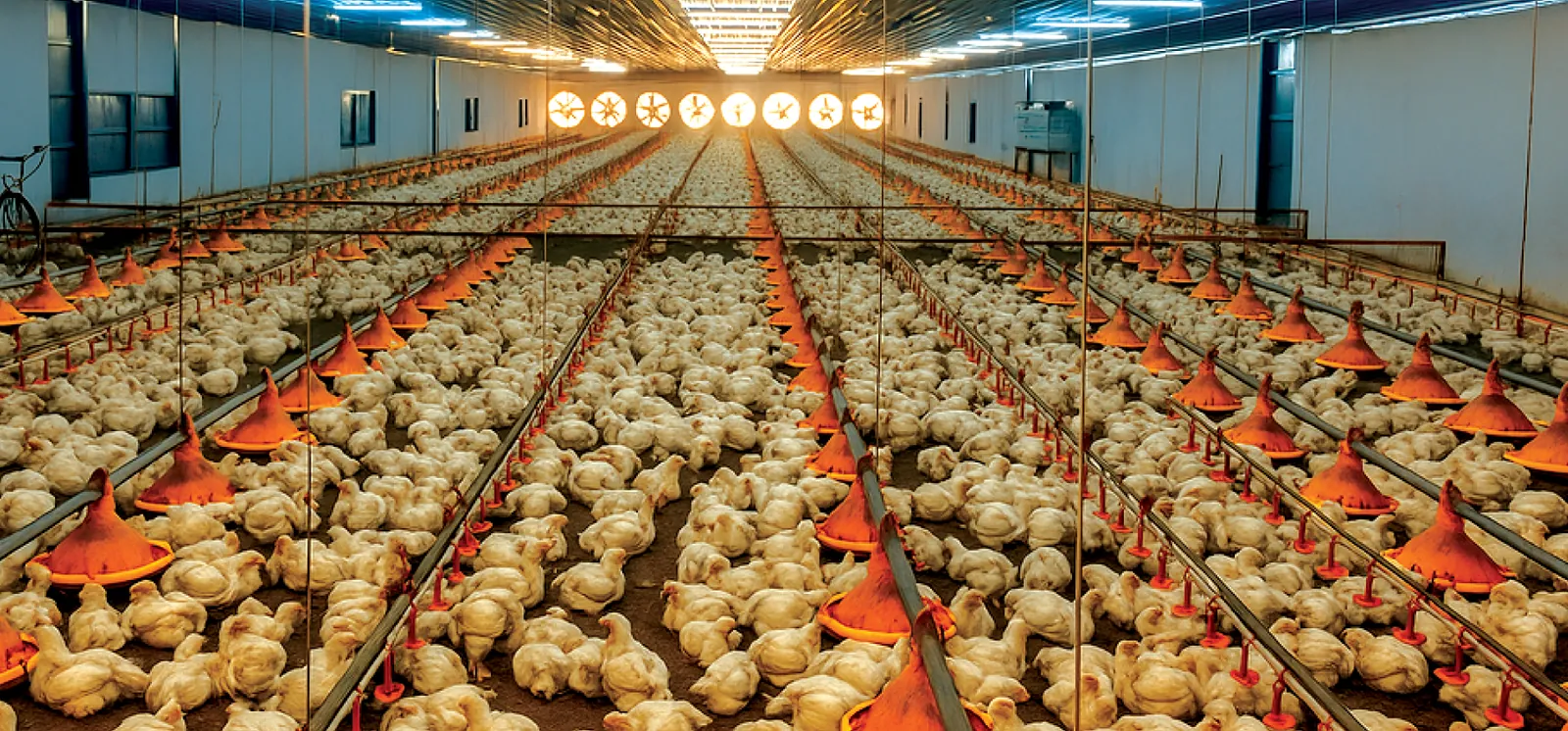
If you are still deciding what to build, our guides on how to start a broiler poultry farm in India and how to start a layer poultry farm in India cover the farm plan that your loan will be based on.
State Poultry Schemes: Telangana, Andhra Pradesh, Maharashtra and Tamil Nadu
State schemes are usually small, targeted and announced for one year at a time through district offices. The table records what we could confirm from official state or district sources.
| State | Scheme found | Main terms | Where to check |
|---|---|---|---|
| Maharashtra | State Level Innovative Scheme: 1,000 broiler unit (running since 2013; GRs of 03.02.2021 and 14.02.2023) | Project cost Rs 2.25 lakh (Rs 2 lakh for a 1,000 sq ft poultry house, store room, water tank, accommodation and electrification; Rs 25,000 for equipment, feeders, drinkers and brooders). Subsidy 50% for general category, 75% for SC and ST. For marginal and small landholders, educated unemployed, and women SHGs or individual women from these groups. | Maharashtra DAHD scheme page; apply on ah.mahabms.com |
| Tamil Nadu | 2024-25 district scheme: 50% subsidy for small country chicken units of 250 birds | Ariyalur district notice (2 July 2024): subsidy of Rs 1,56,875 towards shed construction, feeders and drinkers and four months of feed; minimum 625 sq ft of land away from houses; 30% of beneficiaries from SC or ST; not for earlier beneficiaries of a similar scheme; 250 four-week-old chicks supplied free from a government livestock farm; apply at the nearest government veterinary dispensary. | Ariyalur district notice; your district collectorate and veterinary dispensary for the current year |
| Andhra Pradesh | Poultry Development Policy 2016-2020 (G.O.Ms.No.27, 23 June 2016) | Offered capital and interest subsidies for egg and chicken processing and interest subsidy above 7% on term loans for poultry farms. The policy period ended in 2020; we could not confirm a successor policy for commercial farms. | Policy GO on the National Single Window System; AP Animal Husbandry Department |
| Telangana | No current capital subsidy for commercial poultry farms confirmed from an official source | Telangana runs livestock schemes through the Animal Husbandry Department and district offices from time to time, and NLM applies through the state implementing agency. | District Animal Husbandry Officer; state department notices |
Other states publish similar small-unit schemes. The common pattern is a fixed unit cost, a fixed subsidy share, a priority list (small farmers, women, SC and ST) and a short application window. Watch your district veterinary office notice board around the start of each financial year.
Document Checklist
This list merges the official NLM list of documents and the AHIDF list of required documents, with the equipment items banks usually ask for. Keep scanned copies ready before you open any portal.
Project Documents
- Detailed project report (DPR) with cost of project, means of finance, recurring costs and net income
- Land document: sale deed, lease deed or rent agreement (NLM provides a declaration format for land leased from a blood relation)
- Photographs of the project site
- Proof of your own share of the project cost (bank statement, fixed deposit or similar)
- Layout plan of the farm or plant (AHIDF asks for civil and machinery layouts certified by a registered architect)
- List of machinery and equipment with names of proposed suppliers, backed by supplier quotations
- Civil cost estimate for sheds, stores and other buildings
- Statutory clearances where applicable, such as consent from the State Pollution Control Board, local body permissions and trade licence
- For NLM: list of farmers linked to your unit, with name, Aadhaar number, mobile number and address
Applicant Documents
- PAN card, GST registration (if any), certificate of incorporation or partnership deed (for firms and companies)
- Address proof
- Last three years’ audited financial statements and income tax returns, where applicable
- Bank statement for the last six months
- Cancelled cheque with bank mandate form
- Udyam registration number for MSME benefits under AHIDF
Key Promoter Documents
- PAN card, Aadhaar card, address proof and photograph
- Caste certificate, if applicable
- Education and training certificates
- Experience letter or certificate for earlier livestock or poultry work
Documents You Sign During NLM Processing
The NLM portal’s document formats include a bank guarantee format and applicant undertaking (for self-finance), an integrity compliance proforma, the surety bond, a declaration for existing site pictures, an abstract of bills for capital expenditure and a project completion board format.
Sample Project Report Outline
A bank reads your DPR to answer one question: can this farm repay the loan on time? Build it around the headings your lender and the scheme expect. The NLM model DPR and the AHIDF DPR requirements both point to a structure like this:
- Applicant profile: name, age, education, farming experience, bank details; for groups, registration and partners.
- Project summary: type of farm (broiler, layer, breeder, rural parent unit), breed, flock size, location, land area and ownership, power and road access, distance to the nearest veterinary hospital.
- Market and linkages: who buys your birds, eggs or chicks; hatchery or chick supply tie-up; feed supply.
- Technical plan: house type (open or EC), dimensions in sq ft and sq m, stocking density, equipment list, water source, biosecurity, waste disposal.
- Capital cost: head-wise costs for civil works, equipment, electricals, water, birds and insurance, each tied to an estimate or quotation.
- Recurring costs: feed, chicks, medicines and vaccines, labour, power, water, for the first year.
- Means of finance: your contribution, bank loan and any subsidy, in rupees and percentages.
- Production and income projections: for five years, with mortality and other assumptions stated clearly.
- Financial analysis: yearly cash flow, loan repayment schedule, debt service coverage, break-even.
- Implementation schedule: month-by-month plan from land preparation to first flock.
- Annexures: quotations, civil estimate, layout drawing, land papers, clearances, training certificates.
Use the poultry house calculator to work out house dimensions and equipment quantities for your flock size before you ask for quotations, so the technical plan, the quotation and the cost table all describe the same farm.
Where the Equipment Quotation Fits in the Project Report
Every rupee in the capital cost table needs evidence behind it. AHIDF’s document list asks for a “list of machinery and equipment (with names of proposed suppliers)”, and NLM asks for an abstract of bills for capital expenditure before releasing the final subsidy. In practice, the supplier’s quotation is the document that turns an equipment line in your DPR into a number the bank can verify.
The table below uses the line items from NABARD’s 2023-24 cost breakup for a 5,000-bird cage layer unit (Jharkhand RO) and shows what normally backs each one.
| Cost line (NABARD 2023-24 breakup) | Indicative amount | Evidence the bank will expect |
|---|---|---|
| Civil structure, 1 sq ft per bird at Rs 275 per sq ft (5,000 sq ft, about 465 sq m) | Rs 13,75,000 | Civil engineer’s estimate or PEB supplier quotation, with drawing |
| Feed store (100 sq ft) | Rs 27,500 | Civil estimate |
| Fencing | Rs 12,000 | Contractor estimate |
| Electrical installations at 3% of civil cost | Rs 41,250 | Electrical contractor estimate |
| Water structures (borewell, tank, pipes) | Rs 90,000 | Contractor estimate |
| Cage and layer equipment at Rs 170 per bird | Rs 8,50,000 | Equipment supplier quotation with model, quantities, taxes and delivery |
| Birds (5,250 chicks allowing 5% mortality, at Rs 35) | Rs 1,83,750 | Hatchery quotation or tie-up letter |
| Feed (3.2 kg per bird at Rs 30 per kg) | Rs 4,80,000 | Feed supplier rate or your costing |
| Insurance at 6% | Rs 11,025 | Insurer quotation |
| Vaccines and medicines at Rs 25 per bird | Rs 1,25,000 | Veterinary schedule and costing |
| Labour at Rs 12,000 a month for 1.5 months | Rs 15,000 | Your costing |
| Total (rounded) | Rs 32,10,000 |
Two things stand out. First, the house and the cage equipment together are about 69 percent of this unit’s cost, so a vague equipment line is the fastest way to lose a banker’s confidence. Second, NABARD’s cage allowance of Rs 170 per bird describes a simple three-tier layout. If you plan multi-tier automated cages or an EC house, your costs will differ, and the quotation is what justifies the difference.
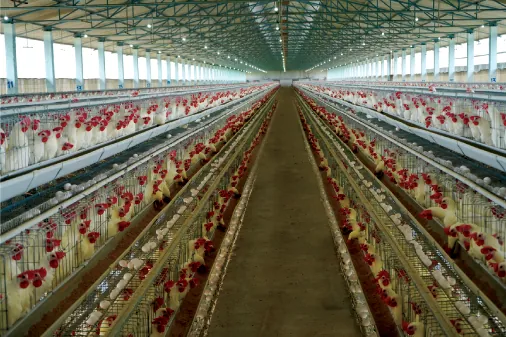
What a Bank-Ready Equipment Quotation Should Contain
- Your name, farm location and the flock size and house size the quotation is based on
- Each item with model name, specification, quantity, unit rate and total
- GST shown separately, plus freight, installation and commissioning (included or excluded, stated clearly)
- Delivery period and payment terms, so the bank can align loan disbursement stages
- Validity date of the quotation
- Supplier’s GST number, address and contact details on a letterhead, signed
- Warranty and after-sales service terms
For the full list of what a farm needs, see our poultry farming equipment list. If one supplier is building the whole farm, what a turnkey poultry farm project includes explains how to check scope line by line, which is also how a bank will read a turnkey quotation.
Tip: Get your quotations dated close to when you file. A quotation that expires before the loan is sanctioned forces a revision, and any change in amount after sanction has to be explained to the bank and, for NLM, may need fresh approval.
Step-By-Step: How to Apply
NLM Rural Poultry (When the Portal Reopens)
These steps follow the application steps on the NLM portal and section 5.5 of the guidelines.
- Prepare your DPR using the model poultry DPR, and gather every document on the official list.
- Register and submit the online application form on nlm.udyamimitra.in, uploading all documents. No physical submission is required.
- The State Implementing Agency scrutinises the application and gives an in-principle recommendation for a bank loan.
- Your chosen lender picks up the application from the portal, appraises it and, if satisfied, sanctions the loan and uploads the sanction letter.
- The SIA places the sanctioned project before the State Level Executive Committee, which recommends it to DAHD.
- DAHD’s Project Approval Committee approves the subsidy on the portal.
- The bank disburses at least 25 percent of the loan (or you spend 25 percent of your own share on infrastructure, for self-finance), and the first subsidy instalment reaches your subsidy account through SIDBI.
- You complete the project, introduce birds after certification from the local veterinarian, and submit completion documents. After SIA verification, the second instalment is released.
Bank Term Loan for a Commercial Farm
- Finalise the farm plan: flock size, house type, land, water and power.
- Collect quotations for the house, equipment and birds, and a civil estimate.
- Prepare the DPR and your own contribution.
- Meet the agriculture or MSME officer at your bank branch, submit the application with the DPR and documents, and ask which scheme or product the bank will use.
- The bank appraises the project, may visit the site and may check your costs against NABARD unit costs.
- On sanction, sign the loan documents and create the security the bank asks for.
- Loans are released in stages against construction progress and supplier invoices. Ask your bank whether it pays suppliers directly.
- Apply separately for a KCC for working capital once the farm is running, if the term loan does not include it.
Timelines You Should Plan for
Official guidelines give a few hard time limits. The rest depends on your bank, state committee meetings and how complete your file is.
| Stage | Official rule or practical note | Source |
|---|---|---|
| NLM loan release before first subsidy | At least 25% of the sanctioned loan must be released | NLM guidelines, 2025 |
| NLM loan instalments | Second loan instalment after construction up to roof level; final instalment when birds or machinery are introduced | NLM subsidy recovery SOP |
| NLM project completion | Within 8 months of receiving the first subsidy instalment, or the subsidy can be recovered | NLM subsidy recovery SOP |
| NLM operation after completion | Minimum 3 years; SIA follow-up for 2 years | NLM guidelines, 2025 |
| AHIDF repayment | Up to 8 years including 2-year moratorium; maximum 10 years from first disbursement | AHIDF guidelines |
| AHIDF sanction and disbursement window | Sanction up to 31 March 2026; disbursement of sanctioned projects up to 31 March 2027 | AHIDF revised guidelines, 26 March 2024 |
| NABARD indicative poultry units | Repayment 5 years, gestation 6 months to 1 year | NABARD Unit Cost 2023-24 |
| KCC interest subvention | Short-term, calculated for up to one year per drawal | DAHD KCC SoP, 2021 |
Build your construction programme around the loan release stages. A turnkey supplier’s delivery schedule and payment terms should line up with the bank’s disbursement plan so that you are not paying a stage before the bank has released it.
Common Reasons Applications Stall or Subsidy Is Recovered
The official guidelines set out the conditions for eligibility and for recovering a subsidy. Checked against those conditions and the documents lenders ask for, these are the gaps to close before you file:
- Wrong scheme for the project. Applying for NLM for a commercial broiler or layer farm, or for AHIDF for a standalone shed.
- Missing training or experience proof. NLM requires training, experience or technical experts. A certificate from a recognised institute or a written arrangement with an experienced professional fills this gap.
- Weak land papers. No clear ownership, a lease that is too short or unregistered, or land that cannot be offered as security when the bank needs it. AHIDF considers leases of at least 10 years.
- No proof of margin money. NLM expects at least 10 percent of the project cost from you.
- Unsupported costs. Round-figure equipment lines with no quotation, or costs far above NABARD unit costs with no explanation.
- Unrealistic projections. Mortality, feed conversion or sale prices that look better than local reality, and no named buyer.
- Existing assets presented as new. NLM does not approve subsidy for existing infrastructure or old machinery.
- Missing clearances. Pollution control consent or local permissions not obtained where the state requires them.
- Delays after sanction. Not completing within 8 months of the first NLM instalment, or abandoning the project within 3 years of production.
- Misstated facts. Any misrepresentation or fabricated document allows DAHD to recover the subsidy.
Tip: Before you file, ask your bank officer to review a draft of your DPR informally. Fixing a cost table or a projection at draft stage costs a day. Fixing it after the committee has seen it can cost a season.
Worked Examples: How the Money Adds Up
NLM Rural Poultry Unit, Bank-Financed
The NLM model DPR’s means of finance for a bank-financed project is 50 percent subsidy, 10 percent own contribution and the balance as a bank loan. Remember that the subsidy is calculated on eligible capital cost and capped at Rs 25 lakh.
| Eligible capital cost | Subsidy (50%, max Rs 25 lakh) | Own contribution (10%) | Bank loan (balance) |
|---|---|---|---|
| Rs 40 lakh | Rs 20 lakh | Rs 4 lakh | Rs 16 lakh |
| Rs 50 lakh | Rs 25 lakh | Rs 5 lakh | Rs 20 lakh |
| Rs 60 lakh | Rs 25 lakh (cap reached) | Rs 6 lakh | Rs 29 lakh |
These are arithmetic illustrations, not costs for any real unit. Working capital, land and anything the guidelines exclude sit outside the subsidy and must be funded separately. The subsidy reaches your loan’s subsidy account in two instalments, so you still need the full loan sanctioned at the start.
Commercial Cage Layer Farm, Bank-Financed
Take NABARD’s indicative Rs 32.1 lakh for a 5,000-bird cage layer unit. With no subsidy, your bank decides the margin. If a bank asked for 25 percent margin, you would bring about Rs 8 lakh and borrow about Rs 24 lakh, repaid over roughly five years after the gestation period. Your actual margin, rate and tenure come from your bank’s sanction letter. Running costs after the first cycle can then move to a KCC, where the interest benefit applies up to Rs 2 lakh.
How Vijay Raj Can Help with Your Project Report
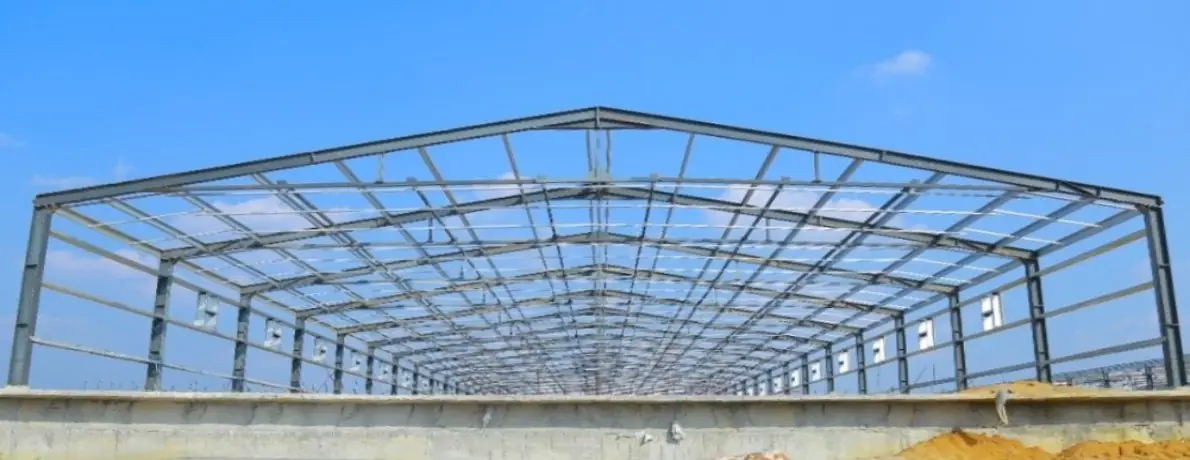
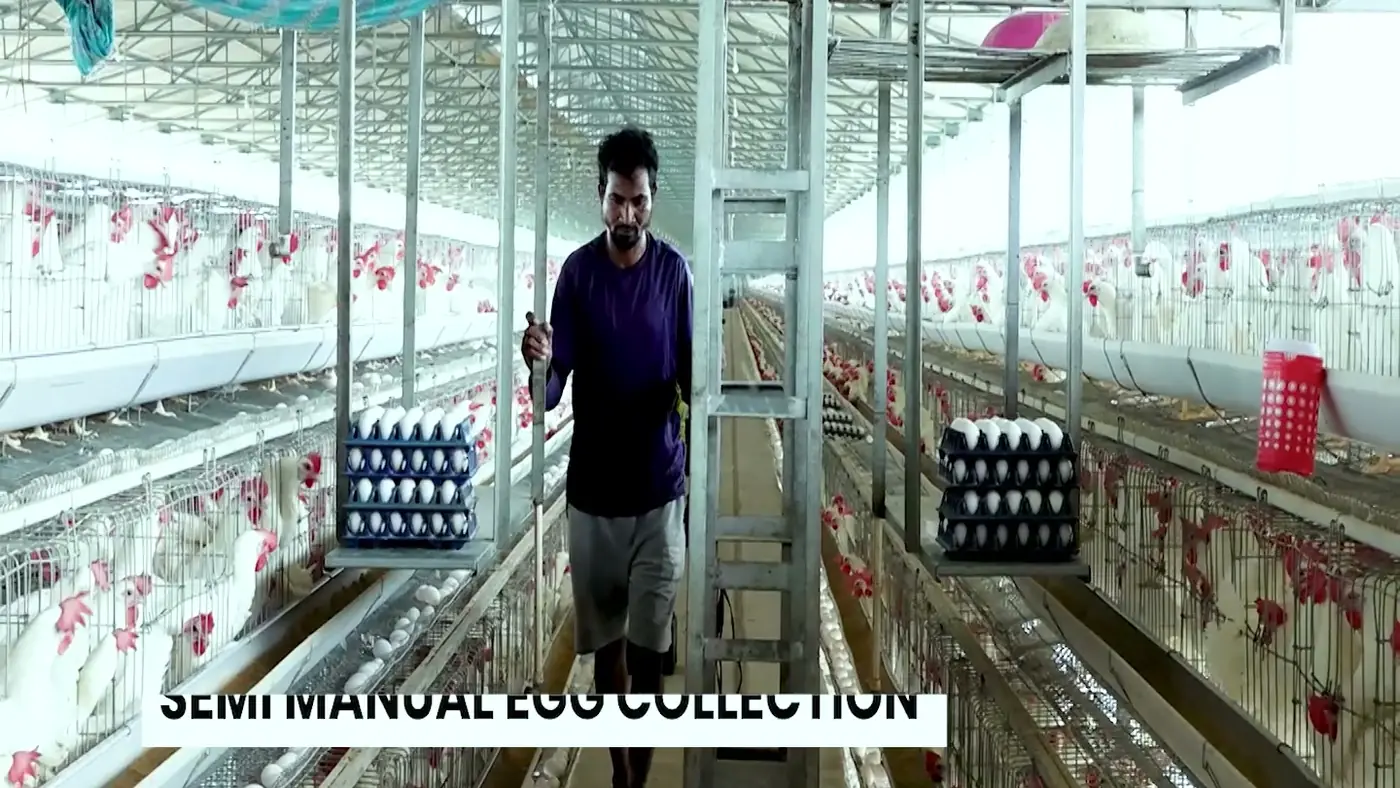
Vijay Raj has built poultry equipment in Hyderabad since 1972. On turnkey projects, the scope starts with farm planning and layout: a site study, shed sizing and the cage or equipment layout for your flock plan. That gives your DPR a technical plan and an equipment list that match each other, and an itemised quotation for the PEB poultry house and the equipment inside it, whether that is layer cages, broiler systems or breeder equipment.
For an NLM-style rural parent unit, the eligible items include brooders, feeders and drinkers. Vijay Raj makes electric brooders and manual feeding and drinking equipment that fit those lines.
Vijay Raj does not approve loans or subsidies, and scheme rules change, so always confirm the current guidelines with your bank and the official portal. When your farm plan is ready, talk to a Vijay Raj engineer about the layout and a quotation for your project report.
Frequently Asked Questions
How much subsidy does the government give for a poultry farm in India?
It depends on the farm. Under the National Livestock Mission, the central government gives a one time 50 percent capital subsidy, capped at Rs 25 lakh, but only for rural poultry parent farms with a hatchery and mother unit of at least 1,000 parent layers. Commercial broiler and layer farms usually rely on bank loans, KCC working capital and occasional state schemes.
Can I get the NLM subsidy for a commercial broiler or layer farm?
Generally no. The NLM Operational Guidelines of January 2025 give the poultry subsidy for a parent farm, rural hatchery and brooder cum mother unit using low input technology birds suited to free range systems. A commercial broiler shed or a cage layer farm with hybrid hens does not match that component. Check the current guidelines on nlm.udyamimitra.in before applying.
Does NABARD give loans directly for poultry farms?
No. NABARD states that it does not lend directly to farmers. You borrow from a commercial bank, regional rural bank or cooperative bank, and NABARD refinances that bank for investment credit in allied activities such as poultry. NABARD's model projects and unit costs are still useful, because banks use them to judge whether the costs in your project report are reasonable.
Is poultry farming covered under AHIDF?
Only in specific forms. AHIDF supports poultry meat processing, animal feed plants and, since the March 2024 revision, integrated projects for a poultry farm with poultry feed. It offers 3 percent interest subvention for up to 8 years on loans of up to 90 percent of project cost. A standalone poultry shed is outside the listed activities. The sanction window ran to 31 March 2026.
Can poultry farmers get a Kisan Credit Card?
Yes. DAHD's KCC guidelines make poultry farmers eligible, including tenants, SHGs and JLGs, if they have owned, rented or leased sheds. KCC covers working capital such as chicks, feed and medicines. Under the interest subvention scheme approved for 2025-26, prompt payers pay an effective 4 percent, with the benefit on up to Rs 2 lakh for animal husbandry only borrowers.
What documents are needed for a poultry farm loan or subsidy?
Expect a detailed project report, land ownership or lease papers, site photographs, proof of your own contribution, supplier quotations for the house and equipment, a civil estimate, PAN, Aadhaar, address proof, six months of bank statements, income tax returns where applicable, a photograph, and training or experience certificates. NLM and AHIDF publish official document lists on their portals.
Is poultry farming eligible under PMEGP?
Confirm before you plan on it. Official copies of the PMEGP negative list, including the one published by Telangana's iPASS portal, name poultry among animal husbandry activities that are not permitted. Some newer material suggests changes in places. Ask your District Industries Centre or KVIC office for the current negative list in writing before you prepare a PMEGP application.
How long does it take to get the NLM poultry subsidy?
The guidelines set stages rather than a fixed number of days: state scrutiny, bank sanction, state committee recommendation and DAHD approval. The first instalment follows release of at least 25 percent of the loan. You must complete the project within eight months of that first instalment, and the second instalment is paid after completion is verified by the state agency.
Sources
- DAHD: Comprehensive Operational Guidelines for National Livestock Mission (January 2025)
- NLM Udyamimitra portal: home page notices (checked September 2026)
- NLM Udyamimitra portal: application steps
- NLM Udyamimitra portal: document formats and model poultry DPR
- NLM Udyamimitra portal: list of documents
- NLM Udyamimitra portal: general FAQ
- DAHD: AHIDF implementation guidelines (2020)
- DAHD: AHIDF revised guidelines (26 March 2024)
- AHIDF portal: list of required documents
- AHIDF portal: scheme instructions and addenda
- PIB: Cabinet approves extension of AHIDF (1 February 2024)
- PIB: Supporting schemes for livestock farmers, dairy producers and fishermen (5 August 2025)
- PIB: Cabinet approves continuation of Modified Interest Subvention Scheme for FY 2025-26 (28 May 2025)
- DAHD: Guidelines and SoP for KCC for animal husbandry, dairying and fisheries farmers (8 October 2021)
- RBI: FAQs on Priority Sector Lending (updated 8 May 2025)
- NABARD: National Livestock Mission
- NABARD: Long Term Refinance
- NABARD Jharkhand Regional Office: Unit Cost 2023-24
- Union Bank of India: Finance to poultry sector
- Federal Bank: Broiler poultry farming loan
- Maharashtra Department of Animal Husbandry: State Level Innovative Scheme
- Ariyalur District, Tamil Nadu: 50% subsidy scheme for small scale poultry units 2024-25 (2 July 2024)
- Government of Andhra Pradesh: Poultry Development Policy 2016-2020, G.O.Ms.No.27 (23 June 2016)
- Telangana iPASS: Negative list of activities under PMEGP
- PMEGP guidelines copy hosted by SLBC Odisha (2018)
- KVIC: PMEGP e-portal